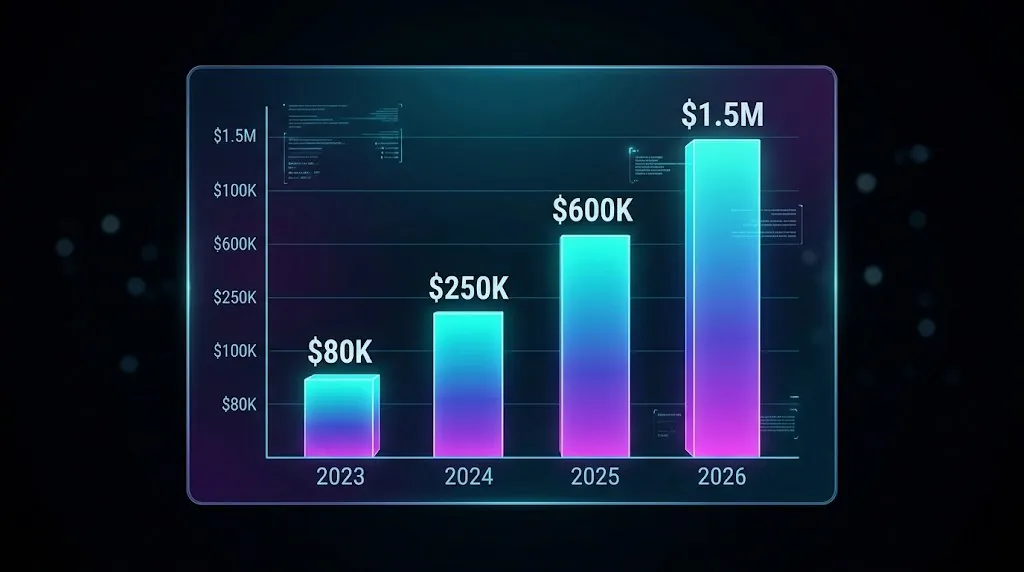

The five SaaS architecture mistakes that predictably cost teams a rewrite at Series B are: treating multi-tenancy as a future problem, skipping background-job infrastructure, adding observability only after something breaks, rolling your own auth, and shipping without a feature-flag system. Every SaaS company we've helped through a rewrite tells the same story: 'It was fine at 100 customers. Then we hit 1,000 and everything broke.' The fixes are well-known, and avoiding them in the first 18 months is the difference between a smooth Series B and a brutal one.
Mistake 1: Treating multi-tenancy as a future problem
Single-tenant databases feel simpler on day one. By customer 200 you're maintaining 200 schemas, and migrations take a weekend each. Design row-level multi-tenancy from day one — Postgres RLS, tenant-scoped indexes, and a clear isolation strategy. It costs almost nothing early and saves quarters of rewrite later.
Mistake 2: No background-job infrastructure
Doing 'just a quick thing' synchronously inside an HTTP request will eventually take down your app. Introduce a job queue (BullMQ, SQS, Inngest) before you need it. Anything over 200ms goes async, with retries and observability.
Want us to review your architecture before Series B?
Book an architecture reviewMistake 3: No observability until things break
Logs alone don't scale. Add structured tracing (OpenTelemetry, Sentry, Datadog) and request-level metrics from week one. Debugging a production incident at 2am without traces is the difference between a 20-minute fix and a 4-hour war room.
Mistake 4: Roll-your-own auth
Every founding team thinks auth is a weekend project. It's not. SSO, MFA, audit logs, RBAC, session rotation, password reset edge cases — they consume engineering quarters. Use Supabase Auth, Clerk, WorkOS or Auth0 and move on.
Mistake 5: No feature-flag system
Without flags, every release is risk. With flags (LaunchDarkly, Statsig, or open-source PostHog) you decouple deploy from release, ship behind a kill switch, and roll out per-customer. It's the single highest-leverage piece of dev infra you can install early.
What Right Looks Like
Modern SaaS in 2026 is built on a typed stack (TypeScript end-to-end), edge-rendered (Next.js, Remix, Astro), Postgres-first, queue-backed, observability-instrumented, and feature-flagged. Get those foundations right and the rest of scaling is mechanical.
Architecture isn't what you design in week one. It's what's still working at customer 10,000.
References and sources
- Web Vitals — Google web.dev
- State of JavaScript 2024 — Devographics
- MDN Web Docs — Mozilla
- Stack Overflow Developer Survey — Stack Overflow
Next step
Build the SaaS your future self will thank you for.
Our engineering team designs and ships SaaS platforms architected to scale — typed, observable, multi-tenant, and AI-ready from day one.